 |
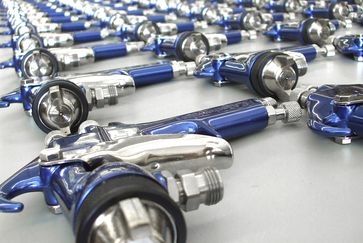
C.A. Technologies CPR Series Spray Guns: Pressure Reduced Power with HVLP Precision
There’s a reason pros trust the C.A. Technologies CPR Series — it’s the perfect blend of efficiency, control, and performance. Built on innovative pressure-reduced technology, these guns deliver the material savings of HVLP with the speed, feel, and finish quality of a conventional sprayer. Whether you’re running a production line or finishing fine work, CPR guns are designed to keep you moving fast without sacrificing perfection.
Choose your setup — Gravity, Pressure, Compact, or Techline — and experience smooth atomization, superior control, and a finish that looks like a million bucks.
Performance Highlights
- Combines HVLP transfer efficiency with the speed and finish quality of a conventional spray gun
- Lightweight, ergonomic designs for comfort and precision across every application
- Available in multiple configurations: Gravity Feed, Pressure Feed, Compact Pressure, and Techline Economy versions
- Dual-cap versatility — each kit includes both CPR and HVLP air caps for flexible spray performance
- Efficient air consumption — 11 to 13.5 CFM @ 29 PSI, depending on air cap model
Product Description
The C.A. Technologies CPR Series Spray Guns redefine what a professional finish tool can do. Designed for efficiency and speed, these guns combine advanced HVLP transfer technology with the coverage power of a conventional air sprayer. Available in several models — from the gravity-fed CPR-G to the pressure-fed CPR and compact CPR-FE — the CPR line covers everything from fine finishing to heavy-duty coating. Each gun features stainless steel fluid passages, precision controls, and CAT’s new CPR air cap system for superior atomization and material savings. Whether you’re spraying wood, metal, or automotive finishes, the CPR Series gives you flawless coverage and lasting reliability.
Features
- Dual technology: pressure-reduced system delivers HVLP efficiency and conventional speed in one gun.
- Flexible configurations: available in Gravity Feed, Pressure Feed, Compact Pressure Feed, and Techline Economy kits.
- Multiple air caps: includes both CPR and HVLP caps for easy switching between applications.
- Complete setup kits: all CAT Packs include 3–4 needle/nozzle combinations, tools, and cleaning brush.
- Optimized airflow: runs efficiently on 11–13.5 CFM at 29 PSI depending on air cap type.
- Available cup options: compatible with standard aluminum cups, pressure cups, or 3M PPS systems.
- Durable construction: stainless steel wetted parts and rugged design for daily production use.
Benefits
- Less waste, more savings: HVLP transfer efficiency reduces overspray and cuts material costs.
- Fast, flawless finishes: pressure-reduced technology delivers a smooth, even spray pattern with excellent atomization.
- Comfortable operation: balanced and lightweight for steady control and reduced fatigue.
- Versatility built in: multiple nozzles and air caps let you adapt quickly to different coatings and finishes.
- Easy maintenance: simple disassembly and included tools make cleaning fast and painless.
Applications
- Wood coatings — furniture, cabinetry, and architectural finishes
- Automotive basecoats, clear coats, primers, and detailing
- Metal fabrication and industrial coating applications
- Composite and specialty coating finishes
- Onsite finishing and production line work
CPR Model Options
- CPR-G (Gravity Feed): Available in CAT Pack and PPS configurations. Includes 3 needles/nozzles and 2 air caps.
- CPR (Pressure Feed): Available in Smart Pack, CAT Pack, and PPS. Includes 3 needles/nozzles and 2 air caps.
- CPR-FE (Compact Pressure Feed): Available in Smart Pack, CAT Pack, and PPS. Includes 3–4 needles/nozzles and 2 air caps.
- CPR-T3 (Techline Economy Model): Available in Smart Pack, CAT Pack, and PPS. Includes 3 needles/nozzles and 2 air caps for affordable fine-finish results.
The Big, Beautiful Payoff
The CPR Series Spray Guns were built for one reason — to make your work look its best while saving you time and money. Every spray feels controlled, balanced, and efficient. You’ll get that smooth finish you’re chasing, with less waste, less fatigue, and more confidence. Whether you’re spraying for a paycheck or for pride, the CPR line is the kind of gear that makes every job feel like your best one yet.
Quick Specs
- Model Range: CPR-G, CPR, CPR-FE, CPR-T3
- Type: Pressure Reduced / HVLP Hybrid Spray Gun
- Air Inlet: 1/4 inch NPS (male)
- Fluid Inlet: 16mm x 1.5mm (male)
- Weight: Approximately 20 oz (varies by model)
- Air Requirements: 11–13.5 CFM @ 29 PSI
- Transfer Efficiency: 65 percent or better
- Materials: Stainless steel wetted parts and precision air cap design
- Included Kits: Multi-nozzle sets, dual air caps, cleaning tools, and regulator
When you’re ready for a spray system that works as hard as you do — fast, efficient, and built for lasting results — choose the C.A. Technologies CPR Series. It’s performance you can count on, finish after finish.
|
|
.jpg)
The Importance of Compressed Air Quality in Spray Finishing
Clean Air Is Part of the Finish
When it comes to professional spray finishing, one of the most overlooked parts of the system is the quality of the compressed air.
Whether you're using HVLP spray guns, conventional air spray equipment, air-assisted airless systems, or other air-powered finishing equipment, compressed air quality can directly affect finish consistency, material usage, equipment reliability, and rework.
For dependable finishing results, the air supply should be:
- Dry
- Clean
- Free of oil contamination
What Happens When Air Quality Is Poor?
Moisture, dirt, oil aerosol, and other contaminants in the compressed-air system can create problems that are easy to blame on the coating or spray gun.
Poor air quality may contribute to:
- Fish eyes, craters, or other contamination defects
- Blushing or cloudiness in some clear finishes and topcoats
- Contaminated or restricted spray-gun air passages
- Inconsistent atomization
- Increased rework and rejection rates
- Premature wear or problems with regulators, valves, and other air-system components
Contaminated air does not care whether you're finishing cabinets, spraying an OEM product, refinishing a vehicle, or applying an industrial coating.
If contamination reaches the finish, the result can be the same: wasted material, lost time, and a finish that has to be repaired or rejected.
Why Compressed Air Needs Conditioning
Air leaving a compressor is typically warm and carries moisture vapor.
As the compressed air travels through piping and begins to cool, moisture can condense inside the system.
That condensate can then move downstream toward regulators, hoses, spray guns, pumps, and the coating process.
A properly designed compressed-air system removes heat, moisture, particles, and unwanted oil contamination before the air reaches the finishing equipment.
What Should an Air-Treatment System Include?
The exact equipment depends on the compressor, plant layout, climate, air demand, and required air quality, but a finishing system may include:
Aftercoolers
An aftercooler reduces the temperature of the compressed air, encouraging moisture vapor to condense so it can be separated and drained from the system.
Moisture Separators
Separators help remove condensed liquid water before it travels farther downstream.
Air Dryers
Refrigerated, desiccant, and other dryer technologies are used to reduce the amount of water vapor remaining in the compressed air.
Inline Filters
Filters can be used to remove particulates, aerosols, and other contaminants before the air reaches sensitive finishing equipment.
Automatic and Manual Drains
Condensate that has been removed from the air still needs somewhere to go. Drains help prevent collected moisture from simply being carried back into the air stream.
Regular Maintenance
Even the best air-treatment equipment cannot perform properly if filters are saturated, drains are blocked, or maintenance has been neglected.
Compressed Air Quality Affects Finish Quality
Clean, dry compressed air helps provide a stable foundation for consistent atomization and coating application.
That matters across the finishing industry, including:
- OEM product finishing
- Cabinet and millwork finishing
- Furniture and wood finishing
- Automotive and transportation refinish
- Industrial and protective coatings
- Metal fabrication and manufactured products
- Architectural and specialty finishing
The finishing application may change.
The need for clean air does not.
Don't Forget the Distribution System
Installing a good filter next to the spray gun will not correct every compressed-air problem.
The entire system should be considered, including:
- Compressor condition
- Aftercooling
- Air dryers
- Main piping
- Drain points
- Filters
- Regulators
- Hoses and fittings
- Point-of-use filtration
Compressed air should be treated as part of the finishing system, not simply as a utility connected to the spray gun.
Need Help Optimizing Your Air Supply?
Air Spray Tech can help you select and maintain the right air filtration and drying equipment for your spray system. Don't let bad air ruin great work.
Call Now 817.490.1777 for air system consulting
Straight Talk on Pricing
To comply with manufacturer MAP (Minimum Advertised Pricing) policies, some products display at list price.
👉 Add to cart to see our real price — it’s often lower than competitors.
Prefer to talk it through? Call us — we’ll make you a deal.
 TMProviding Direction, Improving Performance! TMProviding Direction, Improving Performance!
Azimuth Spray Systems, LLC
Phone 817.490.1777
Email the finishing authority
|
|
|