 |
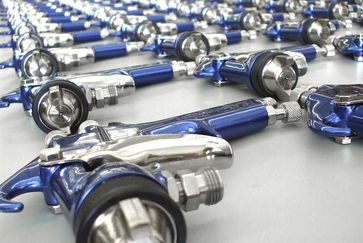
Popular C.A. Technologies Air Spray Gun Models
-
Lynx 100C – General purpose spray gun
-
Lynx 300C – Fine finish spray gun
-
Lynx 100C – For Architectural Multicolor Finishes
-
TomCat 100C – Economical general purpose conventional spray gun (19 oz)
-
Tomahawk – General purpose lightweight (15 oz) conventional air spray gun
-
Jaguar 300C – Fine finish gravity feed paint spray gun
-
Panther 200Z – Rugged general purpose conventional spray gun for spraying zinc rich coatings
-
Panther 200C – General purpose air spray gun for the corrosion control market
-
Panther 100G – For applying adhesives and Panther P100G Waterborne
🎯 Why It Matters
Selecting the wrong spray gun leads to fatigue, defects like runs or sags, and wasted material. Choosing the right model enhances productivity, quality, and overall finish control.
💡 Need Help Selecting the Right Gun?
Our team of spray finishing experts is here to help. Whether you're upgrading your current setup or building a new finishing system, we’ll guide you to the best C.A. Technologies air spray solution for your job.
📞 Let’s Talk Spray Guns
Ready to upgrade your finish?
👉 Contact us today via email or to speak with a specialist or request a quote.
📞 817.490.1777
Need Financing? We Can Help! Finance with Approve! Apply on the product page and provide complete information.
|
|
.jpg)
Choose the Right C.A. Technologies Air Spray Gun for Your Application
Precision Performance Starts with the Right Spray Gun
When selecting an air spray gun, the right choice directly impacts finish quality, production speed, and operator comfort. Whether you're finishing cabinets, coating metal, working in OEM production, refinishing vehicles, or applying specialty coatings, C.A. Technologies offers professional spray guns designed for precision, durability, and efficiency.
Key Questions to Ask Before You Choose
1. Who Will Be Using the Spray Gun?
Operator size, strength, and comfort matter. A lightweight, ergonomic spray gun can reduce fatigue and improve consistency. Choose a gun that fits the operator and the demands of the application.
2. How Long Will the Gun Be Used Each Day?
For continuous use, comfort, balance, durability, and material capacity become increasingly important. Match the spray gun with the appropriate material-feed system, such as a gravity cup, pressure cup, pressure pot, or pump-fed system.
3. How Much Material Will Be Sprayed Per Shift?
For frequent color changes or low-volume work, smaller cups may be the better choice. Higher-volume production may benefit from pressure pots or pump-fed systems that reduce refill time and provide more consistent material delivery.
4. What Coatings Are Being Used?
Solvent-based, waterborne, reactive, corrosive, or specialty coatings may require specific wetted materials and fluid passages.
- Conventional wetted components may be suitable for many general finishing applications.
- Stainless-steel fluid passages may be preferred for waterborne, reactive, corrosive, or chemically aggressive materials.
C.A. Technologies offers spray gun families such as TomCat, CPR, Panther, Jaguar, and CAT-X to meet different coating and application requirements.
5. Do You Have Enough Air Volume for Atomization?
Match the spray gun and air cap to the compressor's available CFM. Compressor horsepower and tank size alone do not tell the whole story. Air-line size, fittings, regulators, filters, dryers, and pressure drop can all affect the amount of air that actually reaches the gun.
Low-CFM spray gun configurations can be helpful where compressed-air capacity is limited, but the complete air system should still be evaluated.
6. What Is the End-Use Application?
Each finishing market places different demands on spray equipment.
- Cabinet, furniture, and millwork finishing: Fine atomization, control, and soft spray patterns.
- OEM product finishing: Repeatability, production speed, durability, and integration with fluid-delivery systems.
- Automotive and transportation refinish: Consistency, atomization quality, and precise operator control.
- Industrial and protective coatings: Rugged performance, coating compatibility, and reliable material delivery.
- Metal fabrication: Equipment selection based on part geometry, coating type, finish requirements, and production volume.
- Architectural and specialty finishes: Precision, flexibility, and efficient material or color changeover.
Look at the Complete Finishing System
A spray gun should never be selected in isolation. The compressor, air treatment, regulators, hoses, fluid-delivery system, coating, spray environment, and operator all influence the final result.
The best spray gun is not necessarily the largest, newest, or most expensive. It is the gun that fits the coating, the production requirements, the operator, and the complete finishing system.
Updated Academy Resource
This Tech Corner has been expanded and updated in the AirSprayTech Academy. Visit the Academy for additional guidance on spray gun selection, equipment setup, application techniques, troubleshooting, and professional finishing.
Finishing Starts With Understanding.
AirSprayTech.com
The Finishing Authority®
|
|
|


