|
|
|
Are You Holding Your Spray Gun Correctly? Last Updated: 09/11/2026 |
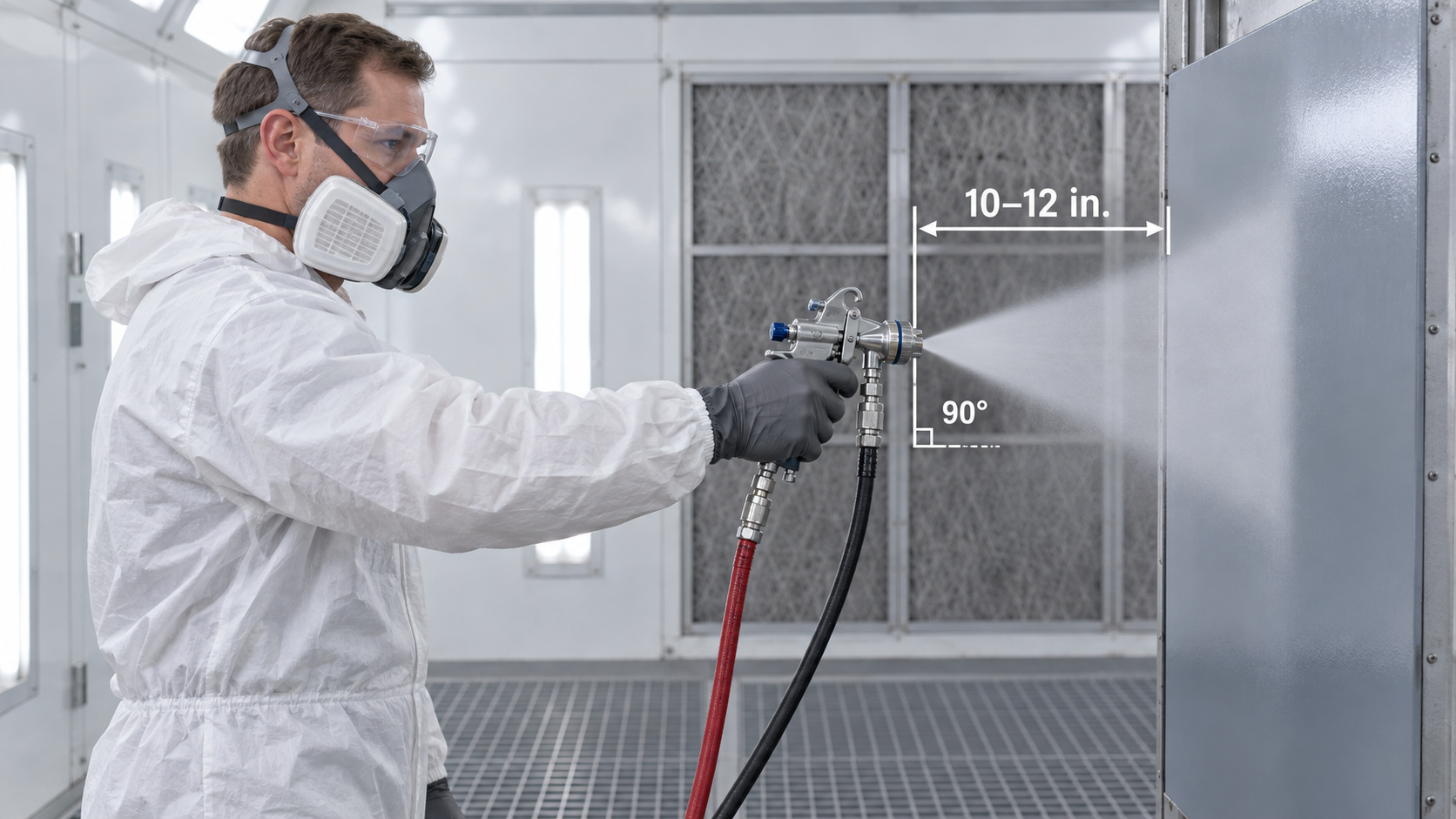 Are You Holding Your Spray Gun Correctly? 5 Techniques That Can Transform Your FinishGood Equipment Helps. Good Technique Makes It Work.A professional spray gun can only do so much. If the gun is held at the wrong angle, moved in an arc, triggered at the wrong time, or operated at an inconsistent distance, even excellent equipment can produce uneven results. The good news is that spray technique can be improved. Whether you're finishing cabinets and millwork, coating OEM products, refinishing vehicles, spraying fabricated metal, applying industrial coatings, or working with architectural finishes, a few basic habits can make a noticeable difference in film build, transfer efficiency, appearance, and rework. 1. Keep the Spray Gun Perpendicular to the SurfaceWhenever the part geometry allows, keep the spray gun close to 90 degrees to the surface. Tilting the gun changes the distance between different parts of the spray pattern and the workpiece. That can contribute to:
The goal is to let the entire spray pattern work evenly across the surface. 2. Move the Gun Parallel to the WorkA common mistake is swinging the gun in an arc from the wrist or shoulder. When that happens, the gun moves closer to the workpiece in the middle of the stroke and farther away at the ends. That changes material deposition across the pass. Instead, move your arm with the spray gun and keep the gun-to-target relationship as consistent as practical. Smooth, parallel movement helps produce a more uniform film. 3. Get the Trigger Timing RightStart moving the spray gun before pulling the trigger. Release the trigger before stopping the stroke. This helps prevent excess coating from collecting at the beginning and end of each pass. Poor trigger timing can create:
Good trigger control becomes especially important around corners, edges, complex parts, and areas where excess material can accumulate quickly. 4. Maintain a Consistent Gun-to-Target DistanceDistance affects atomization, material deposition, overspray, and finish quality. Many hand-held spray applications operate somewhere within a range of approximately 6 to 12 inches, but there is no single correct distance for every gun and coating. The proper working distance depends on:
Too close can produce excessive material buildup, poor pattern development, runs, or sags. Too far away can increase overspray and dry spray and may reduce transfer efficiency. Consistency matters more than chasing a universal number. 5. Use Consistent OverlapEach spray pass should overlap the previous pass enough to build a uniform film across the workpiece. Approximately 50% overlap is a common starting technique for many applications, but the correct overlap depends on the spray pattern and the job. Factors that influence overlap include:
Consistent overlap helps reduce striping, light areas, heavy bands, and uneven coverage. Technique Affects More Than AppearanceSpray technique has a direct effect on the entire finishing process. Good technique can help improve:
The equipment matters. The coating matters. The operator's technique matters too. Watch the Wet FilmOne of the best ways to improve spray technique is to stop concentrating only on the spray gun and start watching what is happening on the workpiece. Look at:
The wet film gives you immediate information about what your technique is doing. Make One Change at a TimeIf the finish is not right, don't change pressure, distance, speed, overlap, and fluid flow all at once. Change one variable and observe the result. That is how you learn which adjustment actually improved the finish. Good finishing is not guesswork. It is observation followed by controlled adjustment. These Principles Apply Across the Finishing IndustryThe coating and equipment may change from one finishing trade to another, but the basic principles of good hand-spray technique remain remarkably consistent. They matter in:
A good spray technique is not tied to one trade. It is part of professional finishing. The Bottom LineYou don't always need new equipment to improve your finish. Sometimes the biggest improvement comes from how you use the equipment you already have. Keep the gun perpendicular. Move parallel to the work. Control the trigger. Maintain your distance. Use consistent overlap. Then watch the finish and let it tell you what still needs adjustment. Better technique creates better results. Finishing Starts With Understanding.
AirSprayTech.com Tags:
spray gun technique, spray application, spray gun distance, spray overlap, trigger control, HVLP technique, coating application, spray finishing
|