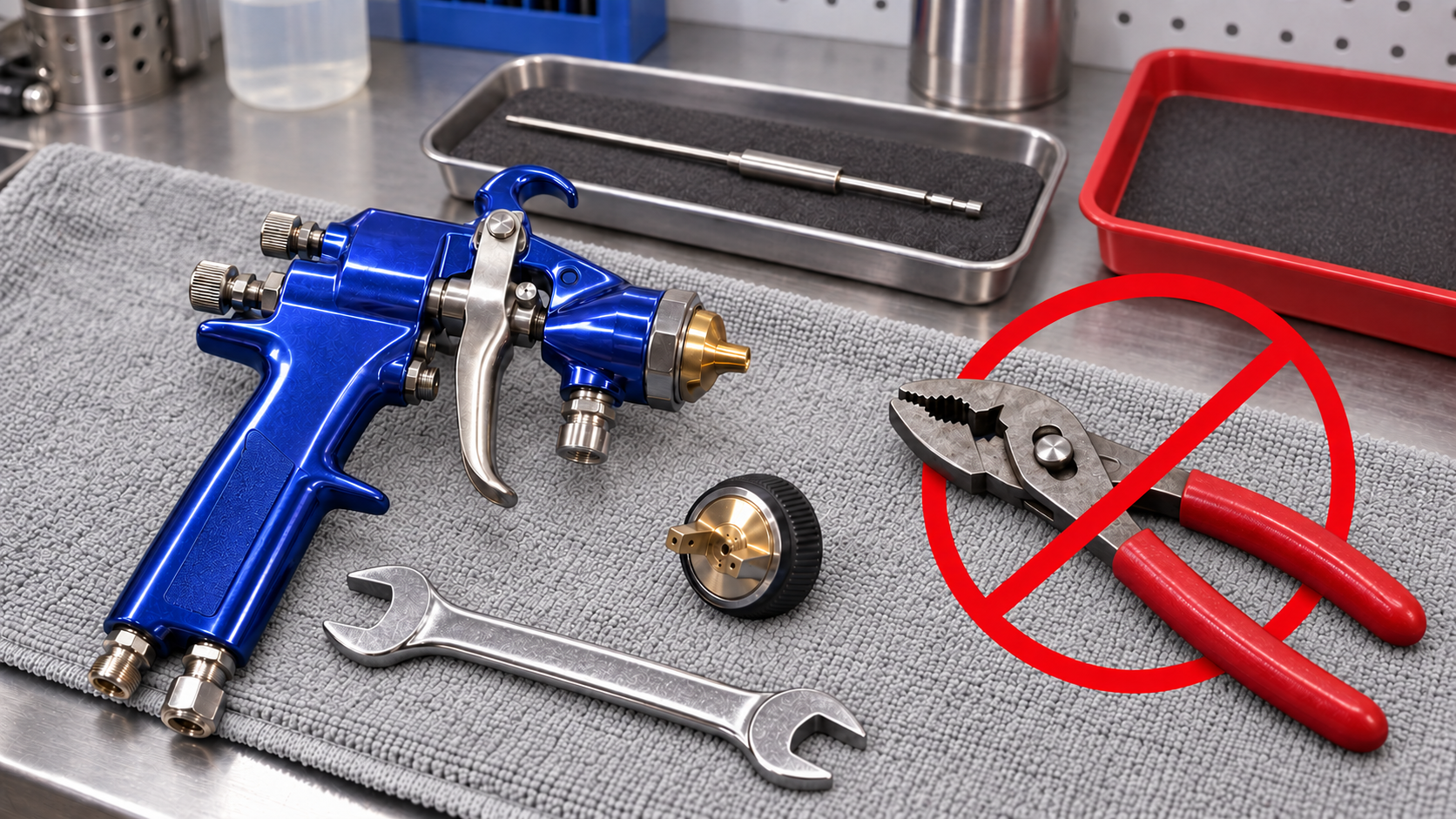
 The One Tool That Should Never Be Used on Your Spray Gun The One Tool That Should Never Be Used on Your Spray Gun
Why Pliers and Precision Spray Equipment Don't Mix
Some of the most expensive spray gun problems don't begin with a worn-out part, a difficult coating, or a production problem.
They begin with the wrong tool.
One of the worst offenders is an ordinary pair of pliers.
Pliers are useful tools. They just don't belong on the precision components of a professional spray gun.
Whether you're maintaining equipment in a cabinet shop, an OEM finishing operation, an automotive refinish facility, a metal fabrication shop, or another professional coating operation, protecting the precision components of your spray gun is essential to maintaining consistent performance.
Why Pliers Can Damage a Spray Gun
Spray guns contain precision-machined components designed to work together within very close tolerances.
These may include:
- Fluid nozzle
- Fluid needle
- Air cap
- Threads
- Mating and sealing surfaces
The serrated jaws of ordinary pliers are designed to grip aggressively.
That's useful when you're gripping a stubborn piece of hardware.
It's exactly what you don't want when working on a precision spray gun component.
Pliers can scratch, gouge, distort, or deform a component before you realize damage has occurred.
A Small Mark Can Create a Big Problem
A spray gun doesn't have to look badly damaged to perform poorly.
Damage to a precision component or mating surface can contribute to problems such as:
- Irregular spray patterns
- Poor atomization
- Fluttering or pulsation
- Material leakage
- Inconsistent fluid delivery
- Premature component wear
- Unnecessary material waste
And here's where troubleshooting can get expensive.
The operator may start changing air pressure, fluid pressure, viscosity, fan adjustment, or other settings when the real problem is a damaged component.
A maintenance mistake can quickly become a finishing problem.
Use the Tool the Manufacturer Intended
When removing or installing a fluid nozzle or another serviceable spray gun component, use the wrench or service tool recommended by the equipment manufacturer.
The correct tool is part of the maintenance procedure.
A properly sized wrench engages the component where it was designed to be held. That provides better control and reduces the possibility of damaging precision surfaces.
Also follow the manufacturer's instructions for tightening and assembly. More force isn't necessarily better.
Overtightening a precision component can create problems just as easily as using the wrong tool.
Inspect the Parts While the Gun Is Apart
If you've taken the spray gun apart for cleaning or maintenance, use the opportunity to inspect the components before putting everything back together.
Look for:
- Dried coating or contamination
- Scratches or gouges
- Damaged threads
- Bent or worn needles
- Damaged fluid nozzles
- Blocked or damaged air-cap openings
- Worn seals or packing components
Don't force damaged components back into service simply because the gun can still be assembled.
A component that appears inexpensive compared with the complete spray gun can still have a major effect on finish quality.
Cleaning Tools Matter Too
Pliers aren't the only tools that can damage spray equipment.
Be careful with anything that can scratch, enlarge, or deform precision openings and surfaces.
Use cleaning brushes, picks, needles, and other cleaning tools only where appropriate and according to the spray gun manufacturer's recommendations.
Air-cap openings are particularly important. Damaging or changing the geometry of an air passage can affect the air that shapes and atomizes the coating.
Clean the component. Don't machine it with your cleaning tool.
What If Someone Has Already Used Pliers?
If you discover plier marks on a spray gun component, don't assume the damage is only cosmetic.
Inspect the component carefully and pay particular attention if the gun is experiencing:
- A spray pattern that cannot be adjusted correctly
- Material leakage
- Fluttering or inconsistent spray
- Poor atomization
- Changes in performance after maintenance
When in doubt, compare the component with an undamaged part or consult the equipment manufacturer's service information.
Good Maintenance Protects More Than the Spray Gun
Proper maintenance isn't just about extending equipment life.
It helps protect:
- Finish quality
- Production consistency
- Material usage
- Operator productivity
- Equipment investment
The few seconds saved by grabbing the wrong tool aren't worth hours of troubleshooting a problem that didn't need to exist.
The Bottom Line
Keep the pliers in the toolbox for the jobs they were designed to do.
When servicing precision spray equipment, use the proper tools, follow the manufacturer's service procedures, inspect the components, and protect the surfaces that make the gun work correctly.
A good finisher knows how to use the right tool.
An experienced finisher also knows when not to use one.
Finishing Starts With Understanding.
AirSprayTech.com
The Finishing Authority®
|