|
|
|
Is an HVLP Spray Gun the Better Choice? Last Updated: 09/11/2026 |
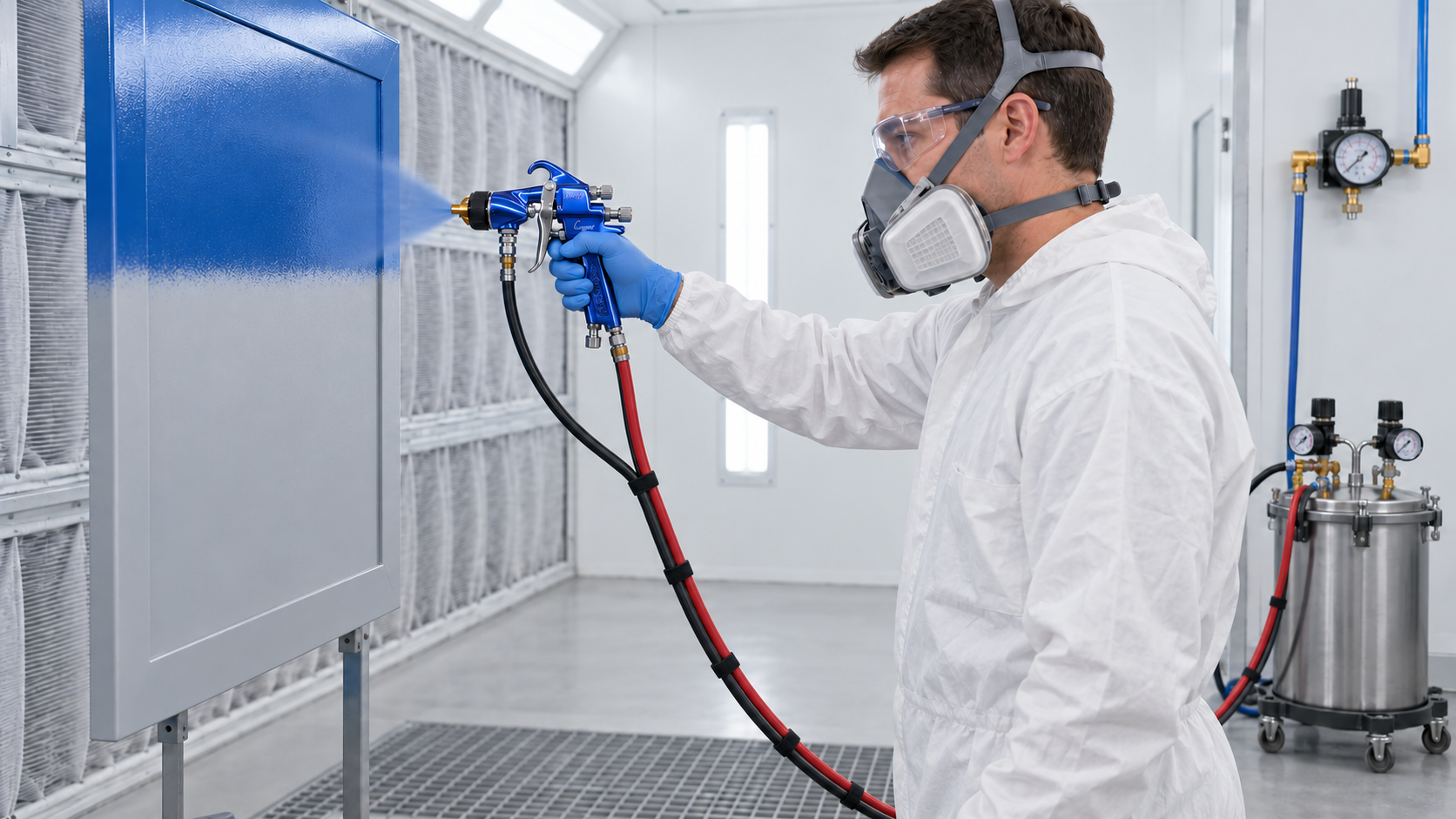 Is an HVLP Spray Gun the Better Choice?Understanding HVLP, Conventional Air Spray, and Transfer EfficiencyHVLP spray technology has earned a strong reputation for reduced overspray and improved material utilization. But that does not automatically mean HVLP is the best choice for every finishing operation. The better question is: Which spray technology best matches the coating, finish requirement, production rate, available air supply, and application? That is where the real comparison begins. What Does HVLP Mean?HVLP stands for High Volume Low Pressure. HVLP spray guns use a relatively high volume of air at lower air-cap pressure than traditional conventional air spray equipment. The objective is controlled atomization with reduced spray velocity at the workpiece. Lower spray velocity can help reduce bounce-back and overspray in many applications, allowing more coating to reach the intended surface. What Is Transfer Efficiency?Transfer efficiency describes the percentage of coating material leaving the spray equipment that actually reaches and remains on the intended surface. In simple terms: The more coating that stays on the part, the less material is lost as overspray. Higher transfer efficiency can help reduce:
When expensive coatings are being applied in a production environment, even modest improvements in material utilization can become important over time. Be Careful with Transfer Efficiency NumbersYou may see HVLP and conventional spray equipment compared using fixed transfer-efficiency percentages. Those numbers can be useful as general comparisons, but they should not be treated as universal performance guarantees. Actual transfer efficiency can be influenced by:
Technology matters. Setup and technique matter too. Where HVLP Can Be a Strong ChoiceHVLP can be especially attractive when finish quality, coating control, and material utilization are important. Cabinet, Furniture & Millwork FinishingHVLP is commonly used where control, fine atomization, and reduced overspray are important when applying stains, sealers, lacquers, conversion coatings, and clear finishes. OEM Product FinishingProduction facilities may benefit from improved coating control and material utilization when the equipment is properly matched to the coating and production rate. Automotive & Transportation RefinishHVLP can provide the control and atomization needed for appearance-sensitive finishing while helping manage overspray. Metal & Fabricated ProductsHVLP may be useful where part geometry, finish requirements, and coating costs make material control especially important. General Professional FinishingAny finishing operation concerned with overspray, coating usage, booth cleanliness, or controlled application may have a reason to consider HVLP. Where Conventional Air Spray Still Makes SenseConventional air spray should not be dismissed simply because HVLP technology exists. Conventional spray equipment can offer excellent atomization and may be well suited to applications where finish quality, production speed, coating characteristics, or process requirements favor that technology. The right choice depends on the complete finishing process. A finishing operation should not switch technologies simply because one carries a more efficient label. It should switch when the new technology improves the actual process. HVLP Requires Enough AirThe words "low pressure" sometimes cause confusion. HVLP may operate at lower air-cap pressure, but it can require a substantial volume of compressed air. Before selecting an HVLP gun, verify:
An HVLP gun starved for air cannot deliver the performance it was designed to provide. Finish Quality Still Depends on SetupHVLP does not automatically eliminate orange peel, dry spray, runs, or other finish defects. Those problems may still be influenced by:
HVLP is a spray technology. It is not a substitute for proper setup and application technique. Consider the Cost of the Complete ProcessWhen comparing HVLP with conventional equipment, don't look only at the purchase price of the spray gun. Consider:
A spray gun that saves coating but slows production may not always be the better choice. A gun that produces outstanding atomization but wastes expensive coating may not be the better choice either. The best decision balances quality, production, material utilization, and operating cost. Is HVLP Better?Sometimes. And sometimes conventional air spray, reduced-pressure technology, air-assisted airless, airless, or another application method may be better suited to the work. That's why the question should never be: "Which technology is best?" The better question is: "Which technology is best for this coating, this part, this production requirement, and this finish?" The Bottom LineHVLP can be an excellent finishing technology. Its ability to control overspray and improve material utilization can provide real benefits in many professional finishing operations. But the letters on the side of the spray gun don't determine the quality or efficiency of the process. The right coating, equipment, air supply, setup, operator technique, and application must all work together. Choose the technology that fits the work. Finishing Starts With Understanding.
AirSprayTech.com Tags:
HVLP spray gun, conventional spray gun, transfer efficiency, HVLP vs conventional, spray finishing, coating application, spray equipment, atomization, overspray, finishing equipment
|