|
|
|
The Worst Thing you Can Do to the Spray Gun You Rely On Last Updated: 09/14/2026 |
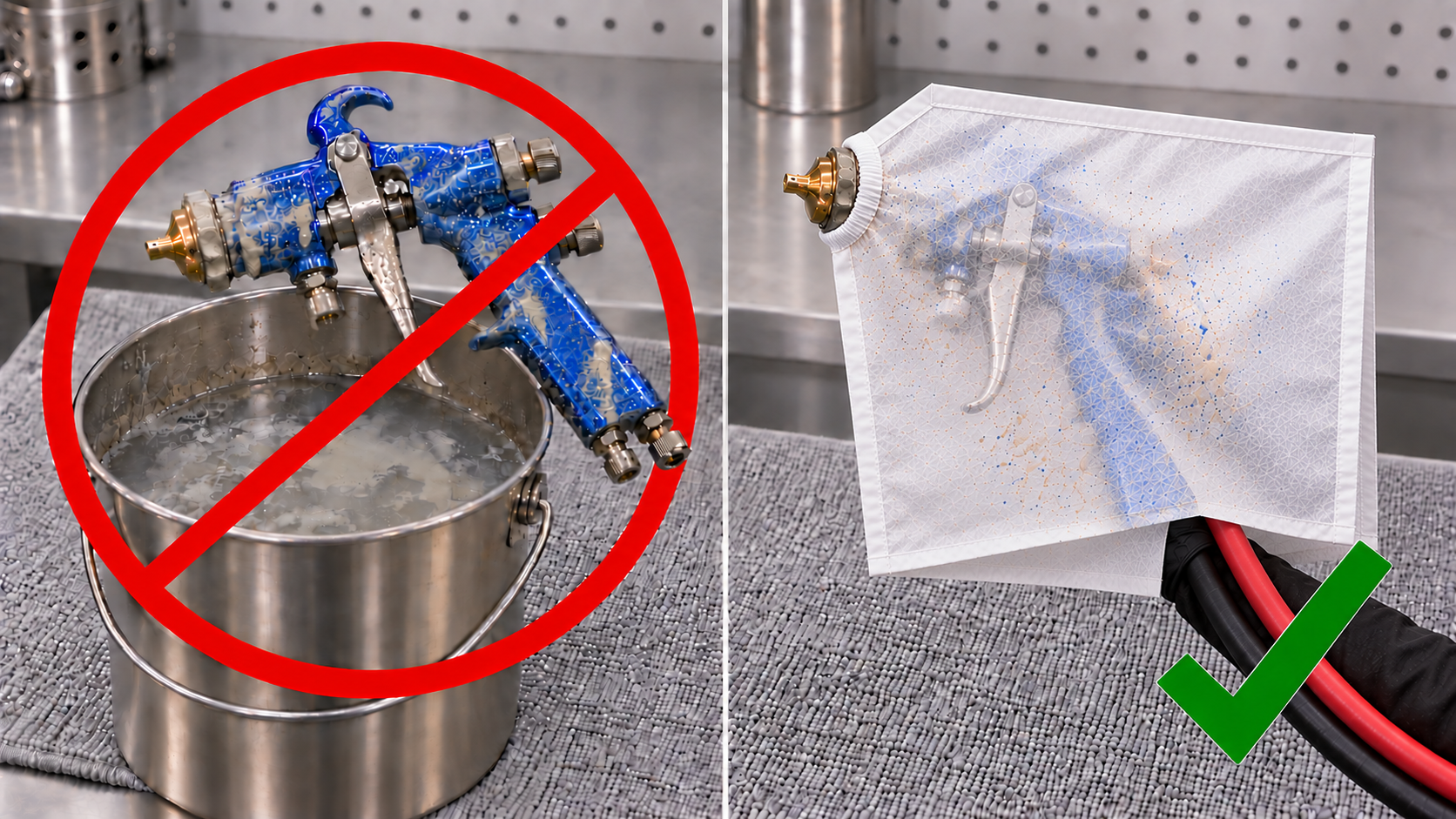 The Worst Thing You Can Do to the Spray Gun You Rely OnDon't Soak It. Protect It.A professional spray gun is a precision tool. Whether it is used in cabinet finishing, OEM production, automotive refinish, metal fabrication, industrial coatings, or another professional finishing operation, its performance depends on clean air passages, undamaged components, correct assembly, and proper maintenance. One of the most common mistakes at the end of a shift is completely submerging the spray gun in solvent or taking the entire gun apart simply because it needs routine cleaning. It may look thorough. It can also create problems that were not there before. Why Soaking the Entire Spray Gun Can Cause ProblemsUsed solvent may contain coating residue, pigment, dirt, and other contaminants removed during cleaning. When the complete gun is submerged, those contaminants may reach areas that normally should stay clean. Depending on the gun design, that can include:
Contamination in these areas can contribute to restricted airflow, inconsistent performance, premature wear, and difficult-to-diagnose spray problems. Air Passages Are Part of the Spray SystemThe air passages inside a spray gun help control atomization and spray-pattern shape. A small amount of contamination can sometimes have a surprisingly large effect. Possible symptoms may include:
That can lead to unnecessary pressure adjustments or troubleshooting when the real problem began during cleaning. A cleaning mistake can quickly become a finishing problem. Routine Cleaning Is Not the Same as Complete DisassemblyThere are times when a spray gun should be disassembled. Scheduled maintenance, blocked passages, damaged components, leaking seals, packing replacement, or another manufacturer-specified service procedure may require it. But unnecessary daily disassembly can increase the chance of:
Routine cleaning should remove coating and contamination without creating additional opportunities for damage. What Should Routine Cleaning Include?Always begin with the spray gun manufacturer's cleaning and maintenance instructions. Depending on the equipment and coating, routine cleaning may include:
The goal is not to clean less. The goal is to clean correctly. Take Special Care with the Air CapThe air cap is one of the most important components affecting spray-pattern shape and atomization. Its precision openings should remain clean and undamaged. When cleaning an air cap:
A dirty air cap can cause problems. A damaged air cap can cause problems that cleaning will not fix. Protect the Gun Before It Gets DirtyAnother practical way to reduce cleanup is to protect the spray gun before overspray builds up on it. A spray gun cover, sometimes called a gun glove, can help protect the gun body and controls from coating buildup while leaving the necessary working areas exposed. Depending on the application, this can help reduce:
Preventing buildup is often easier than removing it later. Use the Right Cleaning MaterialThe correct cleaning method depends on the coating being sprayed. Solventborne wood finishes, waterborne materials, catalyzed coatings, automotive products, high-solids industrial coatings, and specialty finishes may require different cleaning procedures. Always consider:
Use a cleaning material that is appropriate for both the coating and the equipment. Less Solvent Does Not Mean Less MaintenanceReducing unnecessary solvent use should never mean leaving coating inside the equipment. It means using the correct amount of cleaning material in the correct way. Efficient cleaning can help reduce:
Good maintenance is not about using more solvent. It is about using the right procedure. When Should the Gun Be Disassembled?Disassembly may be appropriate when:
When service is required, use the proper tools and follow the manufacturer's instructions. The Bottom LineA spray gun does not need punishment at the end of a hard day's work. It needs proper maintenance. Flush what needs flushing. Clean what needs cleaning. Protect the precision components. And take the gun apart only when the maintenance procedure calls for it. Good maintenance is not about doing more. It is about doing the right things. Finishing Starts With Understanding.
AirSprayTech.com Tags:
spray gun cleaning, spray gun maintenance, soaking spray gun in solvent, air cap cleaning, spray gun air passages, spray gun cover, gun glove, paint gun care, professional spray equipment, finishing equipment maintenance
|