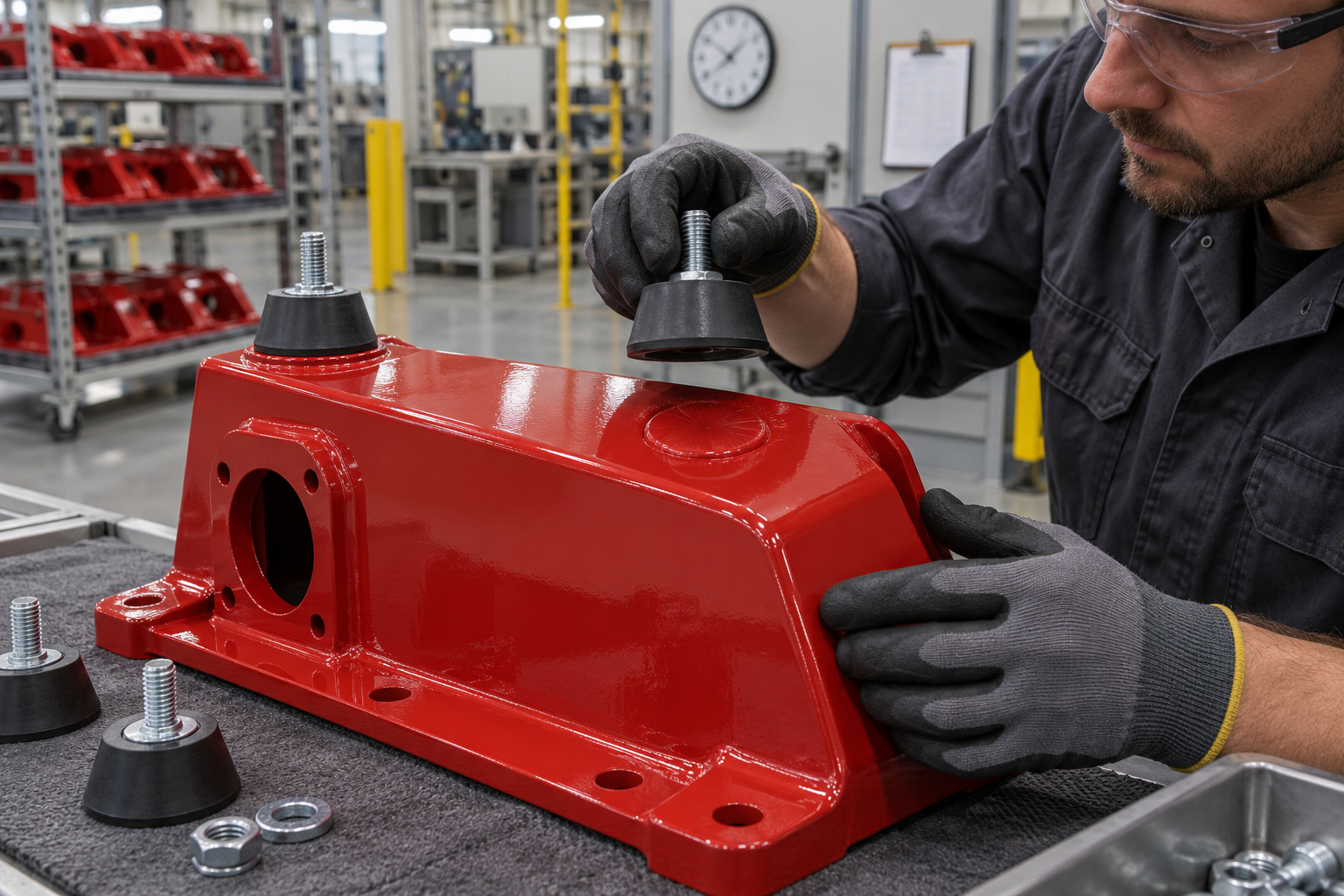
 Dry to the Touch—But Not Ready for Work: How to Recognize Incomplete Coating Cure
A coating can feel dry on the surface and still be soft, solvent-sensitive, or incompletely cured underneath.
That difference matters. A coating placed into service too early may scratch, stain, blister, delaminate, absorb chemicals, stick to other surfaces, or fail beneath the next coat.
Recognizing incomplete cure requires more than touching the surface with a fingertip. The coating type, mixing ratio, film thickness, temperature, humidity, ventilation, cure time, and intended service must all be considered.
Drying and Curing Are Not the Same Thing
The words dry and cured are often used as though they mean the same thing. They do not.
Drying
Drying generally describes the loss of water, solvent, or other volatile material from the applied coating. As the volatile portion leaves, the surface may become tack-free and firm enough to touch.
Curing
Curing describes the physical or chemical process through which the coating develops its intended properties.
Depending on the coating, curing may involve:
- A chemical reaction between two components.
- Reaction with oxygen.
- Reaction with atmospheric moisture.
- Coalescence of polymer particles.
- Evaporation and film formation.
- Exposure to heat.
- Exposure to ultraviolet energy.
A coating may be dry enough to touch long before it develops its final hardness, adhesion, chemical resistance, water resistance, or mechanical strength.
Recognized methods for evaluating stages of drying, curing, and film formation are described in
ASTM D1640/D1640M—Drying, Curing, or Film Formation of Organic Coatings
.
Understanding Common Cure Mechanisms
Different coatings cure in different ways. A condition that helps one coating cure may slow or damage another.
Solvent-Evaporation Coatings
Some coatings primarily form a film as solvent evaporates. Insufficient ventilation, low temperature, excessive film thickness, or use of the wrong solvent can trap volatile material and delay hardness development.
Waterborne Coatings
Waterborne coatings generally require water to evaporate so dispersed polymer particles can come together and form a continuous film. Low temperature, high humidity, condensation, poor ventilation, or application below the minimum film-formation temperature can interfere with this process.
Oxidation-Cured Coatings
Alkyds and similar coatings cure through reaction with oxygen. Excessive thickness, low temperature, limited air movement, or unsuitable driers can leave the lower portion of the film soft even when the surface appears dry.
Two-Component Coatings
Two-component epoxies, urethanes, polyureas, polyesters, and similar systems depend on a chemical reaction between correctly proportioned components.
Incorrect mixing ratio, incomplete mixing, material beyond its pot life, or application outside the permitted temperature range may prevent the coating from developing its intended properties.
Moisture-Cured Coatings
Some urethanes and inorganic zinc-rich primers require atmospheric moisture. Humidity that is too low can slow curing, while excessive moisture may create other film defects.
Baked or Heat-Cured Coatings
Some liquid and powder coatings require a specific combination of object temperature and time. An oven-air reading does not always prove that the coated part reached the required metal temperature for the required duration.
UV-Cured Coatings
Ultraviolet-cured coatings require sufficient energy at the proper wavelength and exposure. Shadowed areas, excessive film thickness, contaminated lamps, incorrect line speed, or insufficient lamp output can leave portions undercured.
Common Signs of Incomplete Coating Cure
1. Persistent Tackiness
The coating remains sticky or tacky beyond the manufacturer’s expected dry or cure time.
Dust, fibers, insects, or packaging material may adhere to the surface. A tacky surface is a strong warning sign, but the absence of tack does not prove complete cure.
2. Softness or Easy Indentation
The coating can be indented by a probe, fingernail, equipment foot, hose, wheel, or other light pressure.
A soft coating may temporarily recover after the pressure is removed, or the indentation may remain permanently.
3. Blocking
Blocking occurs when two coated surfaces stick together after being placed in contact.
It may appear when:
- Painted doors or windows are closed too soon.
- Coated parts are stacked.
- Packaging contacts an uncured finish.
- Gaskets or seals are installed prematurely.
4. Prints and Pressure Marks
Footprints, tire marks, straps, protective wrapping, foam, cardboard, tools, or equipment may leave an impression in a coating that has not developed adequate hardness.
5. Easy Scratching or Marring
The surface scratches, scuffs, burnishes, or mars with less force than expected.
Do not use uncontrolled scratching as an official acceptance test. It may be a useful warning sign that standardized testing or manufacturer evaluation is needed.
6. Persistent Solvent Odor
A strong solvent odor remaining well beyond the expected drying period may suggest trapped volatile material or inadequate ventilation.
Odor alone does not prove incomplete cure. Some low-odor coatings can remain undercured, while trace odor may remain after a coating has developed acceptable properties.
7. Wrinkling
Wrinkling may occur when the surface forms a skin while the material underneath remains mobile or solvent-rich.
This can be associated with:
- Excessive film thickness.
- Rapid surface drying.
- Slow solvent release.
- Applying another coat too soon.
- Incompatible coating layers.
8. Lifting During Recoating
A new coat may soften, lift, wrinkle, or disturb the previous layer if the underlying coating has not developed sufficient cure or solvent resistance.
9. Excessive Color Transfer
Pigment or coating material transfers easily to a cloth during wiping or approved testing.
Color transfer alone must be interpreted carefully. Some coatings naturally chalk, bleed, or release pigment without being undercured.
10. Low Solvent Resistance
The coating softens, dissolves, smears, loses gloss, or transfers heavily when exposed to the solvent specified for an approved cure-assessment procedure.
11. Poor Early Water or Chemical Resistance
The coating stains, blushes, softens, swells, blisters, or changes color when exposed to water, cleaners, fuel, chemicals, or process liquids before full cure.
12. Unusual Gloss or Appearance
Uneven gloss, dull areas, patchiness, haze, or surface disturbance may accompany an incomplete or uneven cure.
Appearance differences can have many causes, so they should be treated as evidence requiring investigation rather than proof by themselves.
13. Poor Intercoat Adhesion
If a subsequent coat is applied over an undercured layer, later adhesion testing may show separation between coats or cohesive failure within the soft layer.
14. Film Movement Under a DFT Probe
A dry-film thickness probe may indent a soft coating and produce a lower or unstable reading. Material collecting on the probe is another warning that the film is not ready for measurement.
Dry to Touch Does Not Mean Ready for Service
A coating data sheet may list several different times:
- Dry to touch
- Tack-free
- Dry to handle
- Minimum recoat time
- Maximum recoat time
- Light service
- Full cure
- Immersion service
- Full chemical resistance
These milestones are not interchangeable.
A coating may be ready for another coat but not ready for immersion. It may be ready for light handling but not for forklift traffic. It may feel hard while still developing chemical resistance.
Common Causes of Incomplete Cure
Incorrect Mixing Ratio
Two-component coatings depend on the proper proportion of base and hardener. Too much or too little of either component can leave unreacted material in the film.
A coating mixed at the wrong ratio may not cure simply by waiting longer.
Incomplete Mixing
Material remaining on the sides or bottom of the container may not be thoroughly combined. This can create localized soft areas even when most of the coating cures.
Failure to Observe Induction Time
Some coatings require a waiting period after mixing and before application. Skipping the required induction time may affect application or cure.
Using Material Beyond Its Pot Life
A coating can exceed its usable pot life without becoming obviously thick or gelled. Applying expired mixed material can produce poor flow, weak film formation, or incomplete performance development.
Low Temperature
Chemical reactions and evaporation generally slow as temperature decreases. The substrate may also be colder than the surrounding air.
Cure-time data is usually based on specific temperature and humidity conditions. A coating applied at lower temperatures may require substantially more time.
Excessive Temperature
High temperatures can reduce pot life, cause rapid surface skinning, trap solvent, shorten application time, or interfere with flow and film formation.
Incorrect Humidity
Humidity affects different coatings differently:
- High humidity can slow water evaporation from some waterborne coatings.
- Low humidity can delay the cure of moisture-cured materials.
- Excess moisture can affect certain urethanes or create surface defects.
- Inorganic zinc primers may require sufficient moisture to complete cure.
Excessive Film Thickness
A thick coating may form a surface skin while solvents or uncured material remain underneath. Higher film build can require longer cure time and may exceed the coating’s acceptable thickness range.
Insufficient Ventilation
Air near the coating can become saturated with water or solvent vapor. Without adequate air exchange, evaporation may slow significantly.
Air movement should remove vapor without introducing dust, contamination, condensation, or unsafe vapor conditions.
Wrong or Excessive Thinner
An unapproved reducer—or too much approved reducer—can change evaporation, film formation, sag resistance, VOC content, and cure behavior.
Surface Contamination
Oil, moisture, salts, cleaning residue, release agents, and other contaminants can interfere with cure, adhesion, or surface properties.
Expired, Frozen, or Improperly Stored Material
Coatings stored outside the manufacturer’s requirements may separate, settle, react, freeze, or otherwise lose their intended properties.
Amine Blush Versus Incomplete Cure
Some epoxy coatings develop a waxy, greasy, cloudy, or sticky surface deposit commonly called amine blush.
Amine blush is a surface condition associated with certain curing agents, moisture, carbon dioxide, temperature, and cure conditions. Its presence does not automatically mean the entire coating film is uncured.
However, blush can interfere with:
- Intercoat adhesion.
- Gloss.
- Topcoat appearance.
- Surface cleanliness.
- Water resistance.
The coating manufacturer should identify the required cleaning and preparation procedure before recoating.
Field Methods for Evaluating Cure
No single field test applies to every coating. Select the procedure according to the coating chemistry, manufacturer’s instructions, project specification, and intended service.
Drying and Film-Formation Evaluation
ASTM D1640/D1640M provides standardized ways to describe stages of drying, curing, and film formation for organic coatings.
Referenced method:
ASTM D1640/D1640M—Drying, Curing, or Film Formation of Organic Coatings
.
Solvent-Rub Testing for Organic Coatings
Certain chemically curing organic coatings become more resistant to solvents as cure progresses. A specified solvent-rub test may be used to assess that resistance.
The manufacturer or project procedure must identify:
- The correct solvent.
- The test method.
- The required number of double rubs.
- The applied force or test apparatus.
- The permitted color transfer, softening, gloss change, or film removal.
- The acceptance criterion.
Referenced method:
ASTM D5402—Assessing Solvent Resistance of Organic Coatings Using Solvent Rubs
.
Solvent resistance alone does not prove full cure. Some coatings develop solvent resistance before they are ready for service, while others may be affected by a particular solvent even after acceptable cure.
MEK Resistance of Inorganic Zinc-Rich Primers
Ethyl silicate inorganic zinc-rich primers cure through a moisture-dependent reaction. A specific MEK-rub procedure may be used when required to assess their cure.
Referenced method:
ASTM D4752—MEK Resistance of Ethyl Silicate Zinc-Rich Primers
.
ASTM D4752 is intended for the specified inorganic zinc-rich primer chemistry. It should not automatically be used in place of ASTM D5402 for organic coatings.
Pencil-Hardness Testing
Pencil-hardness testing can provide a comparative indication of surface hardness and cure development.
Referenced method:
ASTM D3363—Film Hardness by Pencil Test
.
Pencil hardness is influenced by the coating thickness, substrate, pencil preparation, temperature, and operator technique. It is not a universal measurement of complete cure.
Durometer Hardness
Durometer testing may be appropriate for thick, resilient coatings, membranes, linings, and elastomeric materials.
Referenced method:
ASTM D2240—Durometer Hardness
.
Thin films may allow the substrate to influence the result. The manufacturer should specify whether durometer testing is appropriate and which scale is required.
Dry-Film Thickness Measurement
DFT does not directly measure cure, but excessive film thickness is a frequent contributor to slow or incomplete curing.
Compare the actual DFT with the coating manufacturer’s specified range. Areas that are much thicker than specified may require additional cure time or corrective action.
Referenced method:
ASTM D7091—Nondestructive Measurement of Dry Film Thickness
.
Laboratory Analysis
When field observations and simple tests cannot determine the condition, laboratory methods may be needed.
Depending on the coating, specialists may use:
- Fourier-transform infrared spectroscopy.
- Differential scanning calorimetry.
- Hardness testing.
- Solvent extraction.
- Microscopic cross-section examination.
- Chemical-resistance testing.
- Comparison with properly cured control panels.
Do Not Use an Unapproved “Field Cure Test”
Informal fingernail, coin, knife, key, thumbnail, or solvent-wipe checks may provide warning signs, but they should not be presented as standardized acceptance tests.
Uncontrolled methods vary with:
- Operator force.
- Tool shape and sharpness.
- Coating thickness.
- Substrate hardness.
- Temperature.
- Test location.
Use the method and acceptance criteria specified by the manufacturer or project documents.
What to Do When Incomplete Cure Is Suspected
1. Stop the Next Step
Do not automatically topcoat, package, assemble, immerse, expose to chemicals, or place the coating into service.
2. Isolate the Affected Area
Mark or protect the area so it is not damaged or accidentally placed into service.
3. Review the Application Records
Confirm:
- Product and batch numbers.
- Mixing ratio.
- Mixing method and duration.
- Induction time.
- Pot life.
- Reducer type and amount.
- Application time.
- Wet- and dry-film thickness.
- Ambient and surface temperatures.
- Relative humidity and dew point.
- Ventilation.
- Cure duration.
4. Compare Conditions With the Product Data Sheet
Remember that published cure times are usually based on stated environmental conditions and film thickness. Colder temperatures, thicker films, or limited ventilation may extend actual cure time.
5. Contact the Coating Manufacturer
Provide complete application records, photographs, test results, samples, and information about the intended service.
6. Establish an Approved Test Plan
Determine which test can evaluate the specific coating chemistry and what result is required before recoating or service.
7. Determine Whether Additional Cure Time Can Help
A correctly mixed coating exposed to low temperature may cure if given more time under suitable conditions. A coating mixed at the wrong ratio may never develop acceptable properties.
Do not assume that heat, ventilation, moisture, or additional catalyst will solve the problem. Any corrective cure procedure must be approved by the coating manufacturer.
8. Decide Whether Removal Is Required
If the coating cannot achieve the required properties, removal and replacement may be necessary.
Applying another coat over uncured material can bury the problem rather than correct it.
Can You Speed Up Coating Cure?
Sometimes—but only within the manufacturer’s written limitations.
Depending on the coating chemistry, approved actions may include:
- Raising substrate and air temperature.
- Increasing safe air movement.
- Reducing vapor concentration through ventilation.
- Providing controlled humidity for a moisture-cured product.
- Extending cure time.
- Following an approved force-cure schedule.
Uncontrolled heat can skin the surface, trap solvent, create bubbles, cause thermal damage, or introduce a fire hazard. Excessive airflow can introduce dust or cool the surface. Added moisture may damage a coating not designed for it.
When Is the Coating Ready for Recoating?
A coating is ready for recoating when it meets the manufacturer’s and project’s requirements for:
- Minimum recoat time.
- Maximum recoat time.
- Required cure or solvent resistance.
- Surface cleanliness.
- Hardness or film condition.
- Absence of blush, moisture, and contamination.
- Required surface preparation between coats.
A surface that feels dry may still be too soft or solvent-sensitive for another coat. Conversely, waiting too long may exceed the maximum recoat window and require abrasion or additional preparation.
When Is the Coating Ready for Service?
Full-service cure may be different from recoat cure.
Before service, consider whether the coating has developed sufficient:
- Chemical resistance.
- Water resistance.
- Immersion resistance.
- Hardness.
- Abrasion resistance.
- Load-bearing ability.
- Adhesion.
- Temperature resistance.
Floors, tank linings, containment systems, machinery, and chemical-service coatings may require significantly longer cure than is required for light handling.
What Should Be Documented?
An incomplete-cure investigation may include:
- Project and location
- Date and time
- Coating manufacturer and product
- Batch or lot numbers
- Component mixing ratio
- Mixing equipment and duration
- Induction time
- Pot life
- Thinner or reducer
- Application method
- Application and cure temperatures
- Relative humidity and dew point
- Ventilation conditions
- Wet- and dry-film thickness
- Observed symptoms
- Test method and results
- Comparison with an acceptable area
- Manufacturer recommendations
- Corrective action
- Retest results
- Photographs and retained samples
Practical Incomplete-Cure Checklist
- Is the coating still tacky?
- Does it indent under light pressure?
- Does packaging, equipment, or another coated surface stick to it?
- Does it scratch or mar unusually easily?
- Is there persistent solvent odor?
- Is the coating wrinkled or disturbed?
- Does an approved solvent test produce excessive softening or removal?
- Is hardness below the manufacturer’s expectation?
- Is the DFT above the permitted range?
- Were the components mixed at the correct ratio?
- Was the required induction time observed?
- Was the material applied within its pot life?
- Were temperature, humidity, and ventilation acceptable?
- Has the full required cure time elapsed?
- Has the coating manufacturer reviewed the condition?
Primary Referenced Standards
The Bottom Line
Dry to touch is a handling milestone. Full cure is a performance milestone.
A coating may look finished while still developing hardness, adhesion, solvent resistance, water resistance, and chemical resistance. Persistent tack, softness, blocking, easy marring, solvent sensitivity, wrinkling, or poor intercoat performance are warning signs that require investigation.
Do not bury an undercured coating beneath another coat and hope the problem disappears. Determine the cause, use a test appropriate for the coating chemistry, consult the manufacturer, and verify acceptable cure before proceeding.
If the coating is not ready to work, giving it more work to do will not make it ready.
Technical Notice: This article provides general educational information and does not reproduce or replace the complete ASTM, coating-manufacturer, instrument-manufacturer, contract, safety, or project requirements. Cure mechanisms and acceptance criteria vary substantially among coatings. Always obtain and follow the current product data sheet, safety data sheet, and specified test method. Solvent testing should be performed only by appropriately trained personnel using required ventilation, personal protective equipment, and fire-safety precautions.
Copyright © 2026 Azimuth Spray Systems, LLC. All rights reserved. AirSprayTech.com—The Finishing Authority®. No portion of this article may be reproduced, distributed, republished, or transmitted without prior written permission.