Orange Peel
A pebbled or dimpled surface resembling the skin of an orange rather than a smooth, level film.
|
|
|
Finish Defect Diagnostic Center Last Updated: 08/31/2026 |
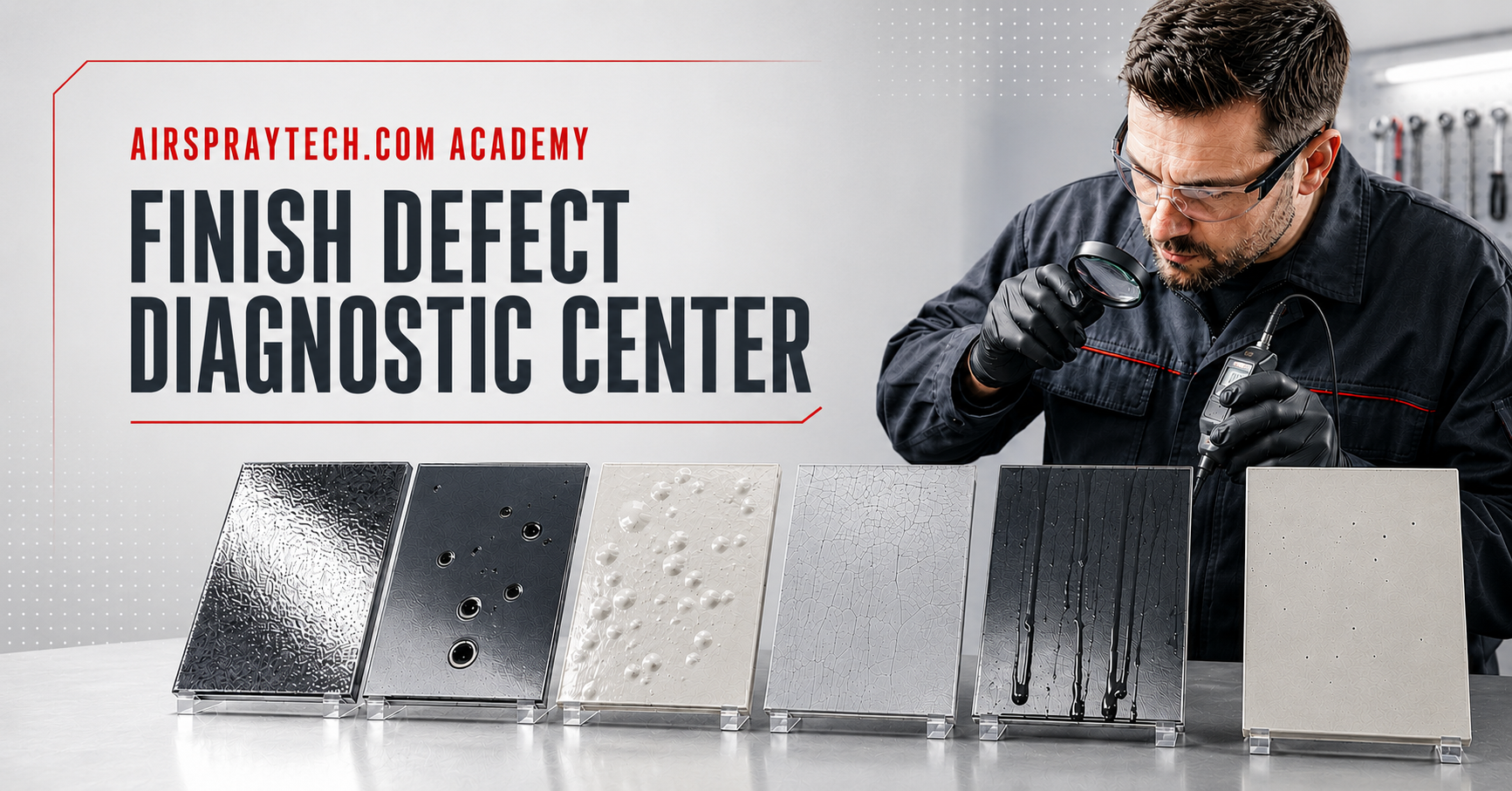
Identify It. Understand It. Correct It. Finish Defect Diagnostic CenterA paint defect is evidence. The shape, location, timing, and pattern of the failure can help reveal what happened during surface preparation, material mixing, application, curing, or service. The AirSprayTech.com Finish Defect Diagnostic Center is designed to help coating professionals recognize that evidence and begin a disciplined investigation. Use this center to compare visible symptoms, understand likely causes, identify useful inspection checks, and review practical corrective and preventive actions. It covers liquid paint, protective coatings, industrial finishing, automotive refinishing, powder coating, floor and roof coatings, linings, barrier coats, aerospace, rail, marine, and related finishing operations. A Defect Name Is a Starting Point—not a DiagnosisDifferent failures can look remarkably similar. A crater may be called a fisheye. Solvent popping may be mistaken for pinholing. Chalking may be confused with jobsite contamination. Before assigning a cause, document the defect, review the coating specification and product data sheet, and consider the substrate, environment, application process, cure conditions, and service exposure. Start With What You Can Observe
1
Look CloselyStudy the defect under good direct and raking light. Note its shape, size, depth, spacing, color, and distribution.
2
Record the ConditionsDocument the substrate, batch numbers, mixing, reduction, spray settings, wet- and dry-film thickness, temperature, humidity, dew point, cure time, and service history.
3
Test Before RepairingUse appropriate inspection methods to confirm the failure mode and extent. A repair made before the cause is understood may allow the same defect to return. Find a Defect by AppearanceSelect the description that most closely resembles what you see. Each article explains recognition clues, probable causes, inspection questions, corrective action, and prevention. Texture, Appearance, and Gloss ProblemsOrange PeelA pebbled or dimpled surface resembling the skin of an orange rather than a smooth, level film. Dry SprayA rough, grainy finish caused when coating droplets lose too much solvent or fail to flow together before reaching the surface. Poor Gloss or Uneven GlossA finish that is duller than expected or shows visible changes in gloss across the coated area. Mottling and CloudingIrregular light-and-dark areas or uneven metallic orientation that produces a patchy appearance. ChalkingA loose, powdery residue created as the coating surface degrades, often after weathering or ultraviolet exposure. ErosionGradual wearing or weathering away of the coating film, reducing thickness and eventually exposing underlying layers. Craters, Holes, and ContaminationFisheyesRound depressions where the wet coating pulls away from a localized contaminant, often leaving a visible center. CrateringBowl-shaped depressions formed when the coating cannot wet or remain continuous over part of the surface. PinholesSmall holes or voids extending into or through the coating film, sometimes exposing the substrate. Solvent PoppingSmall ruptures, bubbles, or crater-like openings produced when trapped solvent escapes from a film that has begun to set. Dirt, Dust, and InclusionsForeign particles trapped in or projecting from the coating, creating visible bumps, nibs, or irregularities. Bleeding and StainingDiscoloration caused when soluble material from the substrate or an earlier coating migrates into the finish coat. Flow, Film Movement, and Application DefectsRuns and SagsDownward movement of wet coating that produces curtains, teardrops, ridges, or heavy uneven areas. WrinklingA rippled or puckered surface that forms when the upper portion of the coating changes faster than the material beneath it. CrawlingRetraction of wet coating into islands or irregular areas, leaving portions of the underlying surface exposed. Mud CrackingDeep, irregular cracks resembling dried mud, commonly associated with excessive film build or uneven drying. OversprayAirborne coating that settles outside the intended spray area, creating roughness, haze, contamination, or unwanted deposits. Picture FramingA visible difference in film build, color, or appearance around edges, corners, seams, or cut-in areas. Adhesion, Cracking, and Film FailureBlisteringRaised bubbles or domes caused by loss of adhesion and pressure from moisture, vapor, solvent, gas, or osmotic activity. Peeling and DelaminationSeparation of the coating from the substrate or between coating layers, often in sheets, strips, or localized patches. Flaking and ScalingDetached pieces of coating resulting from cracking, loss of adhesion, weathering, corrosion, or film embrittlement. Checking and CrackingFine surface checks or deeper breaks that divide the coating into lines, networks, or larger sections. Holidays and DiscontinuitiesVoids, misses, pinholes, or thin areas that interrupt the continuity of a protective coating or lining. Undercutting and Rust CreepCorrosion that advances beneath the coating from a damaged edge, scribe, seam, fastener, holiday, or other break in the film. Cure, Color, and Chemical-Surface ProblemsIncomplete CureA coating that remains soft, tacky, weak, easily marked, solvent-sensitive, or otherwise fails to develop expected properties. Blushing and BloomingA milky, hazy, or dull appearance associated with moisture, rapid solvent evaporation, temperature, or surface deposits. Amine BlushA waxy, greasy, cloudy, or water-soluble surface film that may develop on some amine-cured epoxy coatings. Fading and Color ChangeLoss or alteration of color caused by ultraviolet exposure, weathering, heat, chemicals, pigment behavior, or application variation. Yellowing and DiscolorationAn unintended shift in color associated with resin chemistry, heat, ultraviolet exposure, contamination, service conditions, or aging. Water Spotting and Chemical StainingVisible rings, spots, stains, softening, or color changes produced by water, cleaners, process chemicals, or service exposure. Before You Decide What Went Wrong
Good Troubleshooting Follows the EvidenceAvoid assigning blame before the facts are collected. The applicator, coating, equipment, substrate, environment, and service conditions form one system. The most reliable diagnosis comes from examining how those factors interacted—not from choosing the first explanation that sounds familiar. Technical notice: This diagnostic center provides general educational information. Always follow the project specification, the coating manufacturer's current technical data and safety data, applicable regulations, and the instructions for any inspection instrument or test method. When failure consequences are significant, consult a qualified coating inspector, coating manufacturer, engineer, or testing laboratory. © 2026 Azimuth Spray Systems, LLC. AirSprayTech.com — The Finishing Authority®. All rights reserved. Tags:
paint defects, coating defects, finish defect diagnosis, paint troubleshooting, coating failure, orange peel, fisheyes, blistering, cracking, pinholes, runs and sags, dry spray, adhesion failure, incomplete cure
|
Back to top
💬 WhatsApp Us